
WELCOME BONUS 200%
UP TO €1500 + 200
FREE SPINS
UP TO €1500 + 200
FREE SPINS
Home → Blackjack
Blackjack at Space Fortuna Casino: Variants, Rules and Payouts
Continuous Shuffling Machine shuffles after each round
A Continuous Shuffling Machine eliminates card counting by resetting the deck composition after every single hand. This mechanism ensures that the theoretical house edge of 0.46% remains constant regardless of previous outcomes. Players cannot track high-value cards to adjust their betting strategy for a statistical advantage.
Standard blackjack tables using six decks offer a house edge of 1.85% when paying 6:5, whereas classic single-deck games drop to 0.15%. The continuous shuffle prevents players from exploiting favorable shoe compositions that might otherwise lower the effective house edge below these baseline figures.
This technology directly impacts bonus wagering requirements since table games contribute only 10% toward turnover compared to slots at 100%. A player must wager significantly more on these reshuffled tables to clear the €2,000 bonus threshold than they would on eligible slot machines.
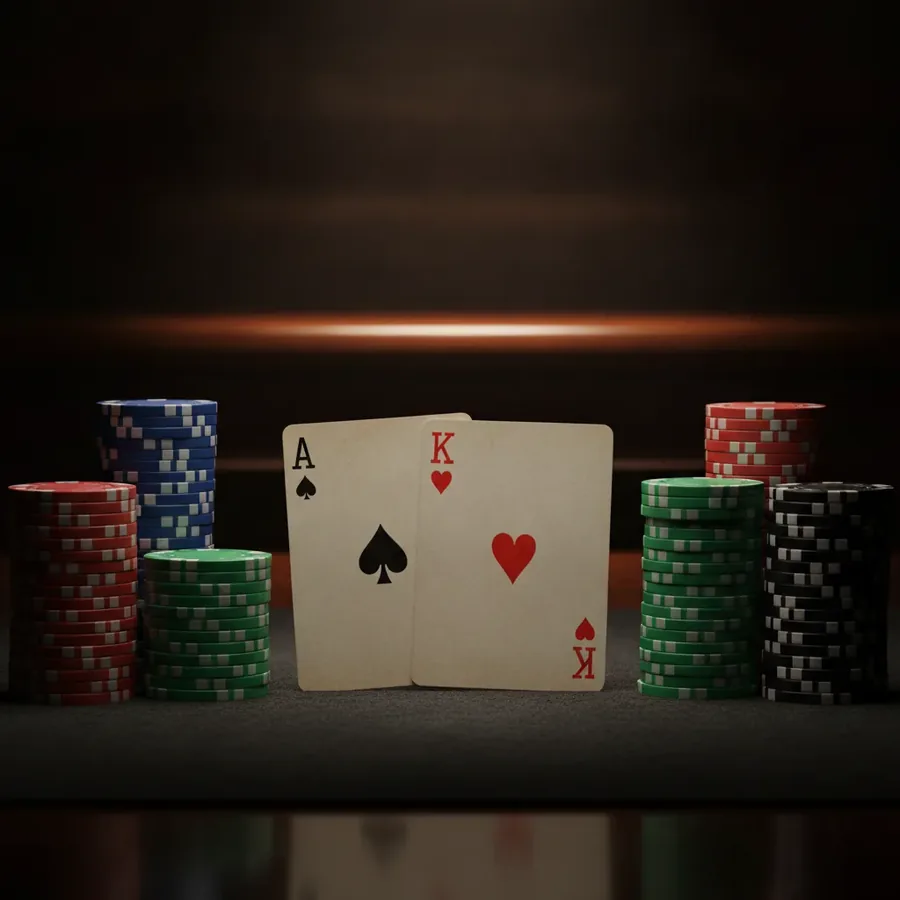
Set session stop after 30 percent loss
Implementing a strict session limit after a 30% bankroll reduction prevents catastrophic losses during high-variance gameplay sessions. For a €100 deposit used toward the 300% welcome bonus, losing €30 triggers an automatic stop before deeper financial damage occurs.
Blackjack Insurance bets carry a severe house edge of 7.47%, rapidly depleting funds even with small wagers up to 50% of the main bet. Setting a hard stop at this percentage protects the remaining balance from being eroded by statistically negative side bets.
This risk management tool is essential because the 6:5 payout rule adds 1.39 percentage points to the house advantage over standard 3:2 tables. Stopping early preserves capital that could otherwise be lost to the compounded mathematical disadvantage inherent in the game rules.
Side Bets Increase House Edge to 5 Percent
Side bets such as Any Pair or 21+3 in Infinite Blackjack drastically inflate the house edge far beyond the base game rate. While the main game RTP sits at 99.47%, these additional wagers can push the effective house edge toward 5% or higher depending on the specific bet structure.
Quantum Blackjack Plus offers multipliers up to 1,000x but maintains an RTP of 99.57% only under optimal strategy conditions for the primary hand. Adding side bets reduces the overall return to player, making the combined house edge significantly steeper than the base 0.46% figure.
These elevated edges make side bets highly inefficient for clearing the 300% bonus wagering requirements which demand high-volume play. Since table games contribute only 10% to turnover, prioritizing low-edge main bets over high-edge side bets is crucial for bonus conversion efficiency.
Why Loss Progression Quickly Reaches Table Limit
Martingale strategies fail because table limits cap the maximum bet, preventing players from recovering losses through doubling down. With a house edge of 1.85% on 6:5 tables, a losing streak quickly escalates bets until hitting the €1,000 limit at Evolution's Blackjack Party.
The Liberal Vegas Strip variant offers a lower house edge of 0.28% and allows doubling after split, yet it still cannot overcome infinite losing sequences. Even with DAS improving odds by 0.14%, the fixed table maximums ensure that progressive betting systems eventually exhaust the player's bankroll.
Loss progression becomes unsustainable when combined with the 10% contribution rate for table games toward the €2,000 bonus requirement. Players chasing bonus turnover via aggressive betting face both mathematical disadvantage and practical betting caps that halt recovery attempts.
Blackjack Party runs with two hosts
Evolution's Blackjack Party features a unique format hosted by two presenters who manage the game flow and audience interaction. The table supports bets ranging from €1.00 to €1,000 EUR, accommodating both casual players and high rollers within the same environment.
Despite the entertaining dual-host presentation, the underlying mathematics remain governed by standard casino rules contributing 10% to bonus turnover. Players must adhere to the same wagering requirements as other table games, regardless of the enhanced social atmosphere provided by the moderators.
The presence of multiple hosts does not alter the fundamental house edge or the 6:5 payout structure prevalent in many online variants. Players should focus on the mathematical reality of the game rather than the production value when calculating expected returns against the 300% bonus terms.
Blackjack variants at a glance
| Variant | Payout | House edge | Rule | Bet range |
|---|---|---|---|---|
| Blackjack Split / Double / H17 – Regel-Effekte | n.a. (Regel-Modifikatoren) | H17 +0.22 Prozentpunkte; RSA −0.08 Prozentpunkte; DAS −0.14 Prozentpunkte | Dealer Hits Soft 17 verschlechtert RTP um 0.22 Prozentpunkte; Resplit Aces verbessert um 0.08 Prozentpunkte; Double After Split verbessert um ca. 0.14 Prozentpunkte; 6 Decks statt 8 – ca. 0.02 Prozentpunkte. | Double – Einsatz ×2 mit einer Karte; Split – bis 4 Hände; Ass-Split meist mit einer Karte. |
| Blackjack 6 Decks, S17, DAS, DOA, Auszahlung 3:2, Basisstrategie | 99.54% | 0.46% | Dealer steht auf Soft 17; Verdopplung auf jeder Zweierkarte; Verdopplung nach Split erlaubt; keine Aufgabe. Basisstrategie ist für diesen Wert zwingend | Blackjack 3:2, normaler Gewinn 1:1, Insurance 2:1 |
| Blackjack Liberal Vegas Strip (liberale Regeln, 3:2) | 99.72% | 0.28% | Günstigste Regelkombination: S17 + DAS + Resplit + Late Surrender. Standardabweichung 1,15 | Blackjack 3:2, Gewinn 1:1 |
| Blackjack Surrender (Late Surrender) – Regel-Effekt | n.a. (Regel-Modifikator) | −0.08 Prozentpunkte | Spieler gibt Hand nach Dealer-Blackjack-Prüfung auf, verliert die Hälfte des Einsatzes. Verbessert RTP um ca. 0.08 Prozentpunkte. Early Surrender ist wesentlich wertvoller (bis −0.6 Prozentpunkte), aber extrem selten. | Rückzahlung 50% des Einsatzes |
| Blackjack Auszahlung 6:5 statt 3:2 (6 Decks) | 98.15% | 1.85% | Ersatz von 3:2 durch 6:5 fügt exakt +1.39 Prozentpunkte zum Vorteil des Casinos hinzu – stärker als jede andere Regeländerung. Bei $10 Einsatz zahlt Blackjack $12 statt $15. | Blackjack 6:5, Gewinn 1:1 |
| Blackjack Ein Deck, klassische Regeln, 3:2 | 99.85% | 0.15% | Weniger Decks = niedrigerer Vorteil; ein Deck gibt ca. −0.48 Prozentpunkte gegenüber 8 Decks. Oft durch 6:5 Auszahlung kompensiert. | Blackjack 3:2, Gewinn 1:1 |
Ace Split: only one card per hand
The rule restricts players to receiving only one additional card after splitting Aces, which significantly alters the strategic landscape compared to liberal variants. This limitation increases the house edge by approximately 0.08 percentage points relative to games allowing resplitting or multiple hits on split Aces. Consequently, the theoretical return drops from the optimal 99.72% seen in Vegas Strip rules down toward the standard 99.54% benchmark for six-deck games. Players must adjust their basic strategy accordingly to minimize losses under these restrictive conditions.
Standard Blackjack Insurance payouts offer 2:1 odds but carry a substantial house edge of 7.47% when using 6–8 decks, making it a poor long-term investment. While the separate side bet pays out if the dealer has an Ace, basic strategy dictates always rejecting this wager unless counting cards with a true count of +3 or higher. The base advantage without insurance stands at roughly 5.88% for a single deck, highlighting how costly this specific side bet is for the average player who ignores counting strategies.
Resplitting Aces improves the player's RTP by 0.08 percentage points, whereas doubling after split boosts it further by about 0.14 percentage points in favorable environments. The absence of resplitting Aces removes a valuable opportunity to maximize hands, pushing the effective house edge closer to the 0.46% mark found in standard six-deck S17 games. This restriction forces reliance on strict basic strategy to maintain competitiveness against the casino's mathematical advantage inherent in the game structure.
Chose Wrong Table for 5 EUR Bankroll
Infinite Blackjack tables accept bets ranging from 1 to 5,000 EUR, providing ample flexibility for small bankrolls while offering an RTP of 99.47%. Quantum Blackjack Plus Live also supports minimum wagers starting at 1 EUR, delivering multipliers up to 1,000x on three-card combinations totaling 21 points. These low-entry live dealer options allow players with limited funds to participate in high-stakes environments without risking significant capital during initial sessions.
Blackjack Party tables require a minimum stake of 1.00 EUR and go up to 1,000 EUR, creating a party atmosphere with two dedicated moderators guiding the game flow. Unlike Infinite Blackjack, this variant does not explicitly list its RTP, but the structural rules typically align with standard six-deck games featuring a 0.46% house edge. Players should verify specific rule sets before playing, as moderator interactions do not alter the underlying mathematical expectations of the blackjack hand outcomes.
A 5 EUR bankroll permits exactly five hands at the minimum stake of 1 EUR in any live table, assuming no wins occur to replenish the balance. Standard deviations for typical blackjack strategies hover around 1.15, meaning variance can quickly deplete small stacks even with favorable RTPs like 99.54%. Players must employ conservative betting patterns to extend playtime, recognizing that statistical edges only materialize over hundreds of thousands of decisions rather than single sessions.
No Double Down on three cards
Doubling after split (DAS) enhances player returns by approximately 0.14 percentage points, a benefit lost when restrictions prevent doubling on three-card hands. Most standard six-deck games allow doubling on any two initial cards, including those formed after splits, maximizing strategic opportunities to capitalize on strong positions. Without DAS, the house edge rises slightly, moving the game away from the optimal 0.28% advantage seen in liberal Vegas Strip configurations.
Basic strategy mandates doubling on specific hard totals like 9, 10, or 11 against weak dealer upcards, a tactic that becomes less effective if restricted to two-card hands only. The inability to double on three-card splits reduces the potential upside of favorable dealer bust cards, forcing players to hit more often and increase risk. This limitation effectively narrows the strategic toolkit, pushing the expected return closer to the baseline 0.46% house edge of standard games.
Insurance bets pay 2:1 but carry a 7.47% house edge, making them statistically inferior to standard doubling strategies which offer positive expected value in specific scenarios. When players cannot double down on three-card hands, they lose a crucial tool for mitigating losses against strong dealer upcards like 10 or Ace. The cumulative effect of these restrictions compounds the house advantage, requiring stricter adherence to basic strategy to avoid unnecessary revenue leakage.
How long do 100 EUR last at a 1 EUR table?
At a 1 EUR minimum stake, a 100 EUR bankroll allows for exactly 100 initial hands before depletion, assuming zero wins and perfect basic strategy execution. With a house edge of 0.46%, the expected loss per hour depends heavily on hand speed, typically ranging between 30 to 60 hands in live dealer settings. This translates to an anticipated hourly loss of approximately 1.38 to 2.76 EUR, extending the bankroll's lifespan to roughly 36 to 72 hours of continuous play.
Live tables like Infinite Blackjack feature unlimited seats and support bets from 1 to 5,000 EUR, accommodating steady progression or flat betting strategies equally well. The RTP of 99.47% implies a long-term retention rate of 0.53%, meaning every 100 EUR wagered yields an average return of 99.47 EUR over infinite trials. Short-term variance can cause significant deviation, but the law of large numbers ensures the bankroll erodes steadily according to the established house edge.
Quantum Blackjack Plus Live introduces multipliers up to 1,000x, which can drastically alter session outcomes by boosting small wins into substantial payouts despite the 0.43% house edge. These side bet features add volatility, potentially preserving a 100 EUR bankroll longer through occasional large returns or depleting it faster during dry spells. Players must balance excitement from multipliers with disciplined bankroll management to withstand the inherent variance of live dealer blackjack environments.
Blackjack doesn't count for every bonus offer
Table games contribute only 10% toward wagering requirements for the 300% welcome bonus up to 2,000 EUR plus 100 free spins, making them inefficient for clearing bonuses. Slots contribute 100%, meaning every 1 EUR wagered on slots counts fully, whereas 1 EUR on blackjack counts as merely 0.10 EUR toward the turnover target. This disparity forces players to either play slots exclusively or wager significantly larger amounts on blackjack to meet the same rollover obligations efficiently.
The 300% match bonus caps at 2,000 EUR, requiring substantial deposit amounts to maximize value, but table game contributions dilute progress toward unlocking withdrawable funds. For instance, wagering 10,000 EUR on blackjack contributes only 1,000 EUR to the requirement, whereas the same amount on slots would fully satisfy it. Players seeking to clear bonuses quickly should prioritize high-RTP slots over blackjack variants, regardless of the latter's superior theoretical return rates.
Blackjack Insurance carries a 7.47% house edge, further penalizing players who attempt to manipulate bonus terms through side bets on table games. Since table games already contribute minimally, engaging in high-edge side bets accelerates bankroll erosion without advancing bonus clearance goals. Strategic focus must remain on low-volatility slot gameplay to ensure efficient conversion of bonus credits into real money while avoiding costly mistakes common in blackjack side markets.
What Push Means: Stake Returns to You
A push occurs when the player and dealer tie, resulting in the return of the original wager without profit or loss. This outcome preserves the bankroll during neutral hands where neither side wins the round immediately. Players should expect pushes occasionally as a standard part of the game mechanics at any table. The absence of a win or loss keeps the session balance unchanged for that specific bet.
The house edge varies significantly depending on whether the payout is 3:2 or 6:5 for a natural blackjack. A 3:2 payout yields 150 EUR on a 100 EUR bet, while a 6:5 payout returns only 120 EUR for the same stake. This difference adds exactly 1.39 percentage points to the casino advantage when using the inferior 6:5 rule structure. Such a shift dramatically increases the long-term cost of playing compared to the standard favorable ratio.
Blackjack 6 Decks offers an RTP of 99.54% with a house edge of just 0.46% under liberal rules. In contrast, the 6 Decks variant paying 6:5 drops the RTP to 98.15% and raises the edge to 1.85%. This comparison highlights how critical payout ratios are for maintaining value, especially when combined with other restrictive conditions. The mathematical expectation shifts unfavorably when the standard 3:2 reward is replaced by the lesser 6:5 alternative.
One Deck vs Eight Decks in House Edge
One deck games typically offer a lower house edge than multi-deck variants due to reduced card composition complexity. The Blackjack Ein Deck option provides an impressive RTP of 99.85% with a mere 0.15% house advantage. This superior statistical profile stems from fewer cards altering the probability of drawing specific valuable cards like tens or aces. Fewer decks generally mean better odds for the skilled player utilizing optimal strategy consistently throughout the session.
Multi-deck games often suffer from higher edges unless compensated by liberal rules such as DAS or resplitting aces. The standard six-deck game here has a 0.46% edge, which is higher than the single-deck 0.15% figure. However, the single-deck version might be offset by less favorable rules like hitting soft 17, which adds 0.22% to the edge. Comparing these figures shows that deck count alone does not guarantee better odds without considering rule variations.
Eight-deck games usually carry a higher baseline edge but can be mitigated by specific favorable rule adjustments. For instance, resplitting aces improves the RTP by 0.08%, while doubling after split helps by 0.14%. These modifiers help narrow the gap between single and multi-deck performance metrics significantly over time. Understanding these nuances allows players to select tables that minimize the mathematical disadvantage despite the larger shoe size.
Infinite Blackjack uses the Six Card Charlie
Infinite Blackjack by Evolution features a unique side bet called Any Pair with an RTP of 99.47%. This live dealer game accommodates unlimited players simultaneously, offering a distinct experience compared to traditional fixed-seat tables. The six-card Charlie rule automatically wins if a player reaches five cards without busting, enhancing strategic depth. This feature adds value by providing winning opportunities even when the total hand value remains low initially.
The Quantum Blackjack Plus by Playtech introduces multipliers up to 1,000x on three-card combinations totaling 21 points. This variant boasts an RTP of 99.57% when played with optimal strategy, slightly higher than the Infinite version. Both games cater to high rollers with betting limits reaching 5,000 EUR per hand respectively. The inclusion of quantum multipliers creates volatile swings that differ markedly from standard progression systems used elsewhere.
Standard Blackjack Party by Evolution focuses on atmosphere with two moderators and bets ranging from 1.00 to 1,000 EUR. Unlike the multiplier-heavy Quantum version, this table emphasizes social interaction rather than complex bonus structures. The infinite seating at Evolution's table contrasts with the fixed capacity of physical casinos, allowing broader participation. Each provider offers distinct mechanical advantages that influence how players approach their betting strategies effectively.
Splitting costs double bet: plan budget
Splitting a pair requires placing an additional bet equal to the original stake, effectively doubling the risk per hand. This action is permitted on any two cards of identical rank, allowing players to separate them into independent hands. When splitting aces, most rules restrict receiving only one additional card per new hand to prevent excessive advantage. Managing this doubled exposure requires careful bankroll allocation to withstand potential losses across multiple active positions.
The ability to double after split (DAS) enhances the value of splitting decisions by allowing further aggressive plays. DAS improves the RTP by approximately 0.14 percentage points compared to tables prohibiting this action entirely. Players must weigh the cost of the extra bet against the potential for increased returns on strong starting pairs. This flexibility adds strategic layers that influence long-term profitability more than simple hit-or-stand decisions alone.
Resplitting aces offers another layer of complexity by allowing players to create additional hands from split aces. This rule improves the RTP by 0.08 percentage points, providing a marginal but meaningful boost to expected returns. Combining DAS with resplitting capabilities creates the most favorable environment for maximizing profit from paired cards. Players should prioritize tables offering both features to minimize the house edge associated with splitting strategies.
Bonus 100 EUR with 10 percent credit
Table games contribute only 10% toward the wagering requirement for the 300% welcome bonus up to €2,000. This means a 100 EUR deposit yields a 300 EUR bonus, but playing blackjack contributes minimally to clearing the terms. Slots contribute 100%, making them the efficient choice for meeting turnover requirements associated with the free spins component. Players must calculate the effective turnover needed based on the game type chosen for gameplay activities.
The 100 free spins likely attach to specific slot titles rather than table games due to the contribution disparity. With a 300% match cap at €2,000, the maximum bonus amount requires significant turnover if played exclusively on tables. A 100 EUR bet on blackjack counts as only 10 EUR toward the required wagering volume efficiently. This restriction forces players to utilize slots for faster clearance of the bonus funds provided upon registration.
Insurance bets pay 2:1 but carry a house edge of 7.47%, making them poor value for bonus clearance. Since table games contribute only 10%, using insurance to meet wagering targets is mathematically inefficient compared to slots. The base strategy advises always declining insurance unless counting cards with a true count of +3 or higher. Relying on high-edge side bets within low-contribution categories accelerates the depletion of bonus capital unnecessarily.
Contact
Live - online chat
Banking









Providers












space fortuna casino 2025